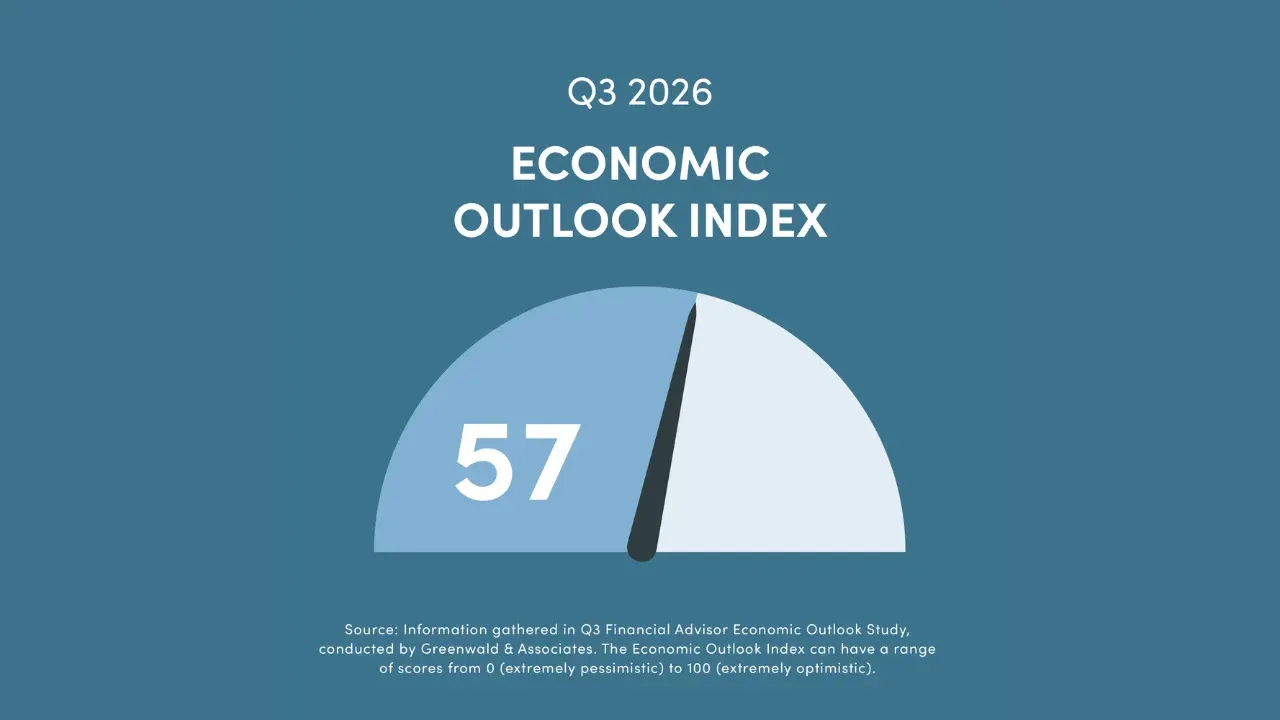
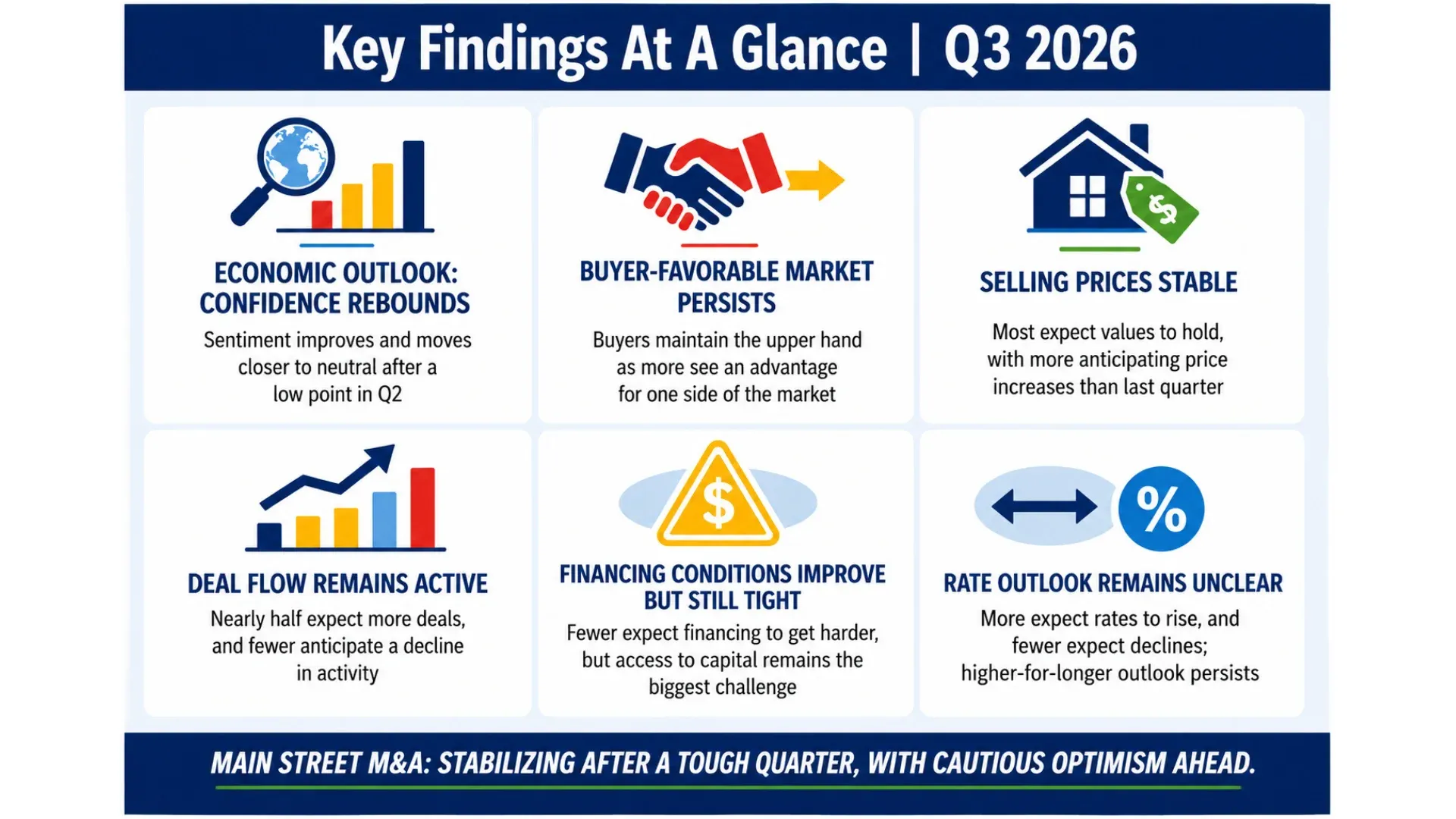
Small business transaction sentiment is recovering as market participants adjust to a new economic reality. According to a DealStream Member Confidence Survey, respondents describing economic conditions as "bad" dropped 12.3 percentage points to 28.8% in Q3 2026. This shift suggests that buyers and sellers are increasingly normalizing higher financing costs and tighter lending standards within the Main Street M&A landscape.
Improving Sentiment and Transaction Volume Expectations
The DealStream survey, which polled approximately 420 active market participants, indicates a notable pivot in market expectations. While Q2 saw a year-high peak in negative sentiment, Q3 data shows a more resilient environment. Specifically, 45.4% of respondents expect business sales volume to increase over the next six months. Although 38% of participants still believe current conditions favor buyers, the data suggests sellers are gaining leverage, signaling a gradual movement toward negotiating parity. This stabilization in sentiment is particularly evident in valuation expectations, where 73.9% of participants forecast that business selling prices will either remain flat or decrease as buyers move away from peak multiples.
Credit Constraints and Sector-Specific Activity
Access to credit continues to serve as the primary operational friction point for small business dealmakers. However, financing anxieties appear to be softening; the percentage of respondents expecting tighter lending conditions fell from 56.4% in Q2 to 44.6% in Q3. Despite this, 82.3% of participants expect interest rates to either rise or remain unchanged, effectively accepting elevated borrowing costs as the baseline. Transactional interest is currently concentrating in defensive and essential service sectors. The survey identifies Business Services (44.8%), Energy & Utilities (36.8%), and Construction & Contractors (33.0%) as the leading sectors for expected activity, reflecting a strategic shift toward more stable, recession-resistant industries.
Key Takeaways
- Economic "bad" sentiment dropped 12.3 percentage points to 28.8% in Q3 2026.
- 45.4% of market participants expect business sales volume to increase over the next six months.
- 82.3% of respondents anticipate interest rates will either rise or remain unchanged.
FinanceInsyte's Take
In our view, this rebound does not signal a return to the era of cheap capital, but rather a "normalization" phase for Main Street M&A. The fact that participants are accepting higher rates as the status quo suggests that the market has successfully priced in macro headwinds. For financial institutions, this indicates a shift from widespread volatility to a more predictable, albeit more expensive, credit environment where sector-specific stability—particularly in essential services—will drive deal flow.
Questions & Answers
How are buyers and sellers adjusting to current interest rate environments?
Market participants are increasingly accepting higher financing costs and tighter lending standards as the permanent landscape, rather than temporary hurdles, which is helping to move transactions forward.
Which sectors are showing the most resilience in transaction activity?
Expected activity is shifting toward defensive and essential service sectors, specifically Business Services (44.8%), Energy & Utilities (36.8%), and Construction & Contractors (33.0%).
What is the current outlook for business valuations in the small business market?
Valuations appear to be stabilizing, with 73.9% of respondents forecasting that selling prices will remain flat or decrease as buyers reject the peak multiples seen in previous cycles.
Is credit availability becoming a less significant concern for dealmakers?
While access to credit remains the largest operational friction point, the anxiety surrounding it is decreasing, evidenced by the drop in respondents expecting tighter lending from 56.4% to 44.6%.
Source: Businesswire