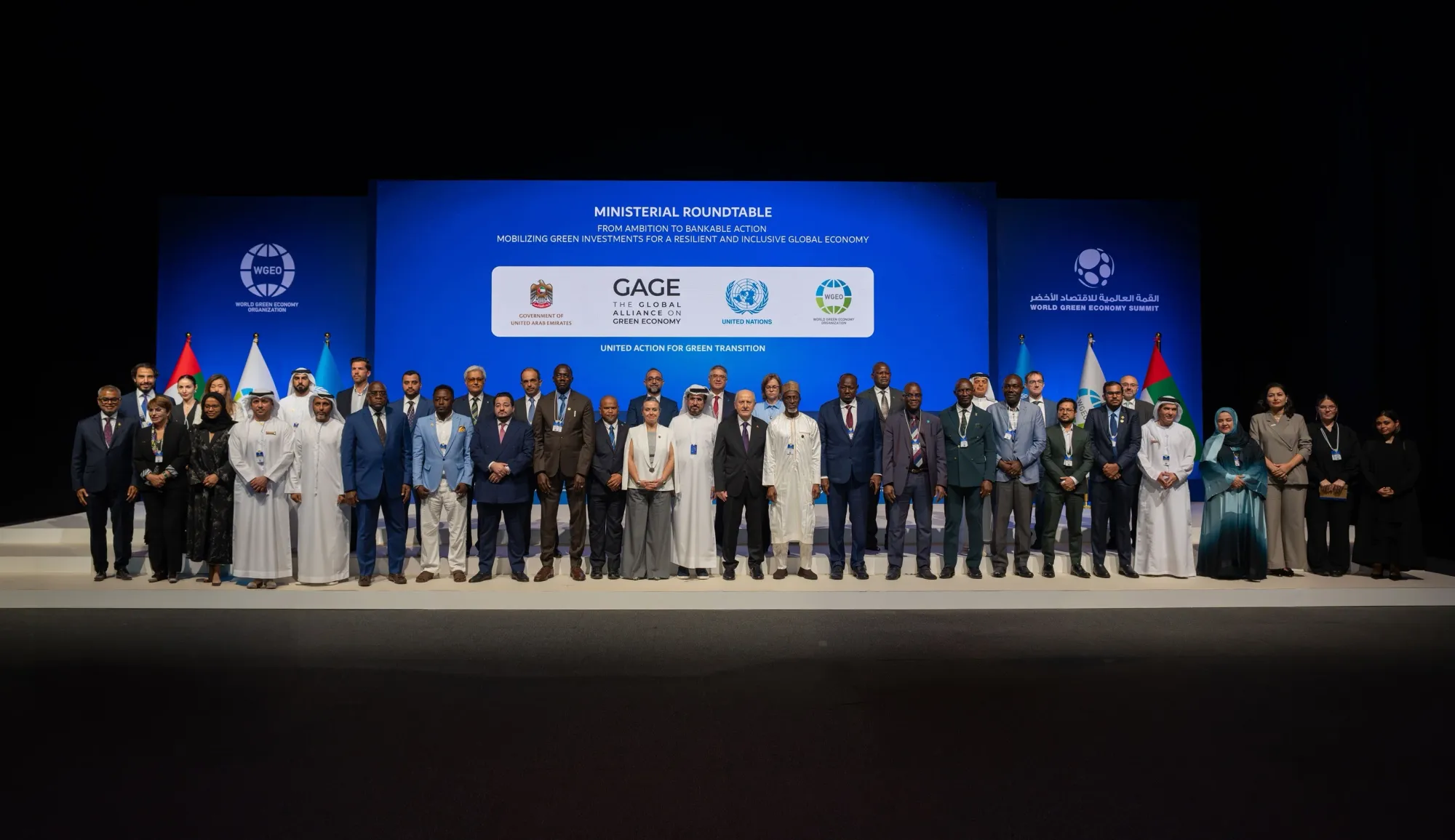
The 12th World Green Economy Summit (WGES) in Dubai has shifted the global climate conversation from high-level policy commitments toward the practicalities of project finance. During a ministerial roundtable titled "From Ambition to Bankable Action," leaders addressed the critical gap between government climate strategies and the actual deployment of scalable, investable green capital required for a resilient global economy.
Mobilizing Capital for Bankable Green Projects
HE Saeed Mohammed Al Tayer, Chairman of the World Green Economy Organization, opened the session by identifying the primary bottleneck in the global green transition: the conversion of political ambition into projects capable of attracting institutional finance. While governments have established increasingly clear targets and green economy plans, Al Tayer noted that the urgent task remains translating these frameworks into effective partnerships and capital at scale. The discussion emphasized that "bankability" must extend beyond simple financial returns to include the creation of green jobs and equitable opportunities for small businesses and youth. This approach seeks to bridge the divide between promising environmental concepts and the structured, investment-ready assets that global capital markets demand for large-scale implementation.
Strategic Alignment with UAE Consensus and UNFCCC
The roundtable featured high-level representation from the UAE, Senegal, Nigeria, Palau, the Maldives, and Türkiye, alongside United Nations officials. A central focus of the dialogue was the accessibility of climate finance for vulnerable regions. HE Dr. Amna bint Abdullah Al Dahak, Minister of Climate Change and Environment for the UAE, stated that the nation remains committed to making climate capital available, accessible, and affordable. This commitment is positioned in alignment with the UAE Consensus and the UNFCCC climate finance architecture. The objective is to ensure that emerging markets and Small Island Developing States can access the necessary funding to meet their climate obligations, effectively linking international financial structures to local environmental requirements and resilience goals.
Key Takeaways
- The WGES 2026 theme, "From Success to Scale," focuses on transitioning from policy ambition to scalable green economy implementation.
- HE Saeed Mohammed Al Tayer identified the conversion of climate commitments into investable projects as the defining challenge of the green transition.
- The UAE is positioning its climate finance strategy to support emerging markets and Small Island Developing States through the UNFCCC architecture.
FinanceInsyte's Take
In our view, this summit signals a maturing phase in the green transition where the focus is moving from "what" needs to be done to "how" it will be funded. By emphasizing "bankability," the WGES is addressing a fundamental market failure: the lack of structured, de-risked assets that institutional investors can easily integrate into their portfolios. For financial institutions, this suggests a growing demand for sophisticated project structuring that balances environmental impact with rigorous, scalable financial returns.
Questions & Answers
How is the WGES 2026 addressing the gap between climate policy and actual investment?
The summit is focusing on "bankable action," which involves structuring green initiatives into investment-ready projects that can attract the capital required for large-scale implementation and measurable results.
What role does the UAE play in the global climate finance architecture?
The UAE is working to make climate capital available, accessible, and affordable, specifically targeting support for emerging markets and Small Island Developing States in alignment with the UAE Consensus and UNFCCC.
Beyond financial returns, what does "bankability" entail according to WGES leadership?
According to HE Saeed Mohammed Al Tayer, bankability includes structuring projects that attract capital while simultaneously creating green jobs and providing opportunities for small businesses and young people.
Which international entities are represented in these green investment discussions?
The discussions involve various national ministries (including the UAE, Senegal, Nigeria, Palau, the Maldives, and Türkiye), the Arab Towns Organization, and United Nations officials.
Source: Businesswire