
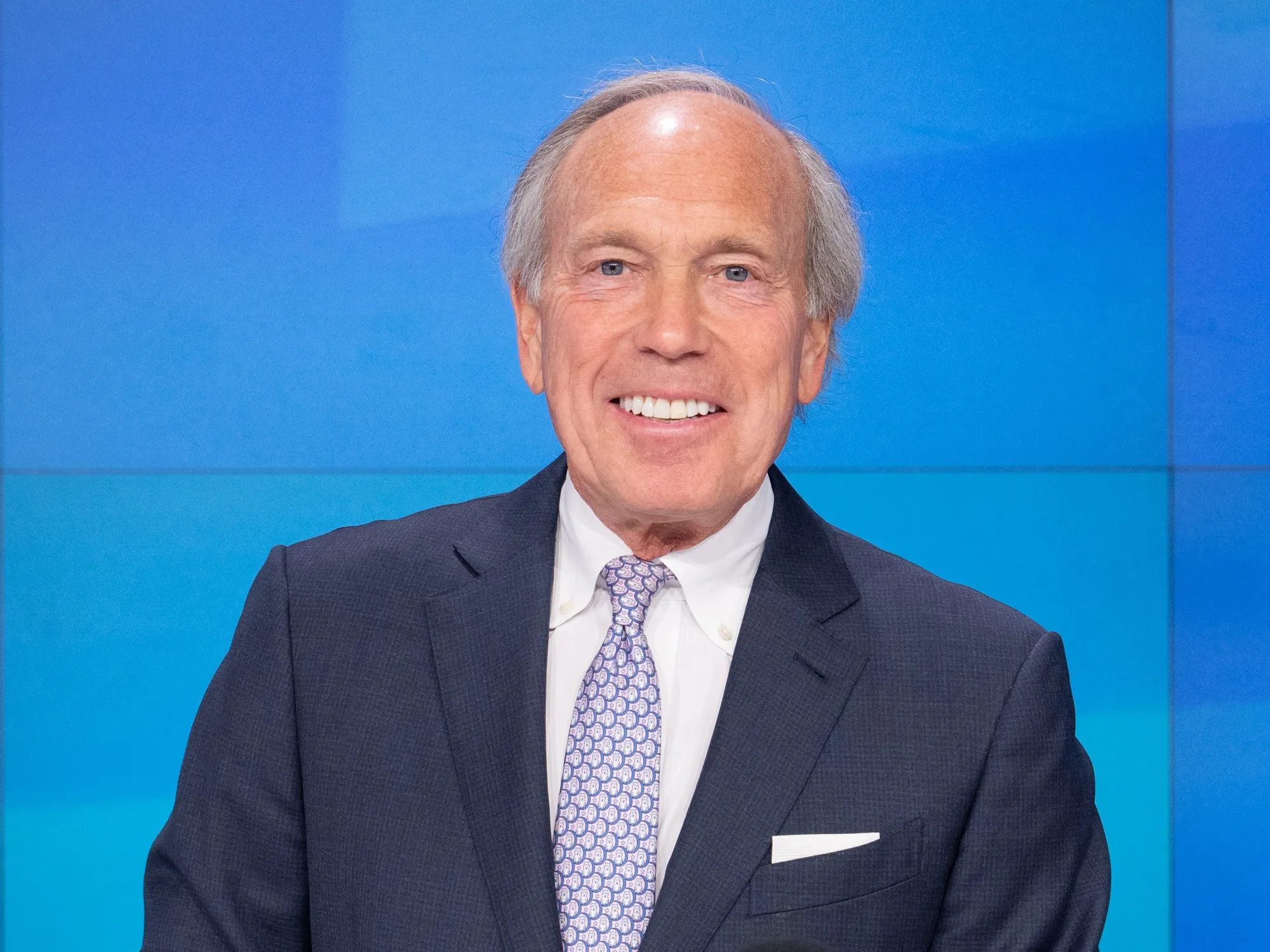
TFS Financial Corporation (NASDAQ: TFSL), the holding company for Third Federal Savings and Loan Association of Cleveland, has reported record earnings of $30.5 million for the third quarter ended June 30, 2026. This represents a 31.4% increase over the $23.2 million earned in the previous quarter, driven by higher net interest income and a strategic release of provisions for credit losses. For the nine months ended June 30, 2026, the company reported net income of $76.1 million, a 17.1% increase compared to the same period in 2025. These results signal a period of growth in mortgage originations and a successful transition in the company's core technological infrastructure. For B2B decision-makers in financial infrastructure and banking, the report highlights a specific balance between aggressive loan growth and a calculated approach to managing funding costs and liquidity.
TFS Financial Record Earnings and System Upgrades
The company's quarterly net income rise to $30.5 million was supported by several key financial drivers. Net interest income grew 4.6% to $81.4 million, aided by a nine basis point increase in the yield on interest-earning assets, primarily loans. This was partially offset by a five basis point increase in the cost of interest-bearing liabilities. Consequently, the net interest margin rose six basis points to 1.90%, and the interest rate spread improved by four basis points to 1.58%.
A significant contributor to the quarterly bottom line was a $3.5 million release from the provision for credit losses. This release was driven by a decrease in reserve requirements for longer-term, fixed-rate home equity loans, a segment that the company states is outperforming loss model expectations. This offset higher reserve requirements associated with growth in other residential loan portfolios. The total allowance for credit losses decreased to $102.0 million, representing 0.63% of total loans receivable, down from 0.67% at the end of the previous quarter.
Beyond the balance sheet, Chairman and CEO Marc A. Stefanski confirmed the successful upgrade of the company's primary banking system. This infrastructure update is positioned to support current operations and future scalability. On the expense side, total non-interest expenses decreased 2.3% to $54.1 million. This reduction was primarily due to a $1.8 million decrease in salaries and employee benefits, resulting from lower group health insurance costs and the capitalization of payroll costs related to software development and loan origination. Non-interest income also saw a modest increase of 6.7% to $7.9 million, influenced by gains in bank-owned life insurance contracts and unrealized gains on interest rate lock commitments.
Third Federal Loan Growth and Liquidity Management
TFS Financial experienced significant expansion in its loan portfolio during the quarter. Loans held for investment increased by $439.2 million to $16.18 billion. This growth was fueled by a $236.1 million increase in home equity loans and lines of credit, alongside a $201.3 million increase in residential core mortgage loans. Residential mortgage loan originations and acquisitions reached $616.4 million for the quarter, a substantial increase from $251.7 million in the prior quarter and $384.2 million in the same period of 2025.
To fund this growth and maintain liquidity, the company adjusted its funding model. Total deposits decreased by $195.0 million to $9.99 billion. This decline was largely driven by a $220.9 million decrease in CDs. The company explicitly attributed this to a strategic decision to manage funding costs, acknowledging that this approach carries the risk of increasing customer attrition. To compensate for the deposit outflow and support loan expansion, borrowed funds increased by $668.5 million to $5.81 billion. This increase included advances from the Federal Home Loan Bank (FHLB) of Cincinnati and federal funds purchased.
The company's overall financial position remains stable under the Basel III capital framework. As of June 30, 2026, TFS Financial reported a Tier 1 leverage ratio of 10.72%, with Common Equity Tier 1 and Tier 1 ratios both at 16.88%, and a total capital ratio of 17.79%. These figures exceed the requirements for the company to be considered "well capitalized." Additionally, the company continues its stock repurchase program, having repurchased 355,241 shares at an average cost of $14.07 per share during the first nine months of 2026, with 4,588,845 shares still authorized for repurchase.
Key Takeaways
- TFS Financial achieved record quarterly earnings of $30.5 million, supported by a net interest margin increase to 1.90% and $616.4 million in residential mortgage loan originations.
- The company strategically reduced its CD deposits by $220.9 million to manage funding costs, while increasing borrowed funds to $5.81 billion to support loan growth.
- A $3.5 million release from the provision for credit losses was triggered by the outperformance of longer-term, fixed-rate home equity loans relative to loss models.
FinanceInsyte's Take
In our view, TFS Financial is executing a high-conviction strategy that prioritizes asset growth and margin expansion over deposit stability. The decision to accept customer attrition in the CD segment to curb funding costs is a bold move in a competitive pricing environment, signaling that the company is more comfortable relying on FHLB advances and borrowed funds to fuel its mortgage engine. This shift suggests a transition toward a more aggressive operating model that leverages wholesale funding to capitalize on high-yielding residential assets.
Furthermore, the successful upgrade of the primary banking system is a critical operational win. For a regional player with $18.08 billion in assets, technical resilience is the primary prerequisite for scaling originations without increasing operational risk. The fact that the company is capitalizing payroll for software development indicates a long-term commitment to digital infrastructure. While the release of credit loss provisions provides a short-term earnings boost, the real story is the company's ability to maintain a "well capitalized" status while aggressively pivoting its funding mix. This signals a calculated bet that loan yields will continue to outpace the rising cost of borrowed funds.
Source: BUSINESSWIRE