
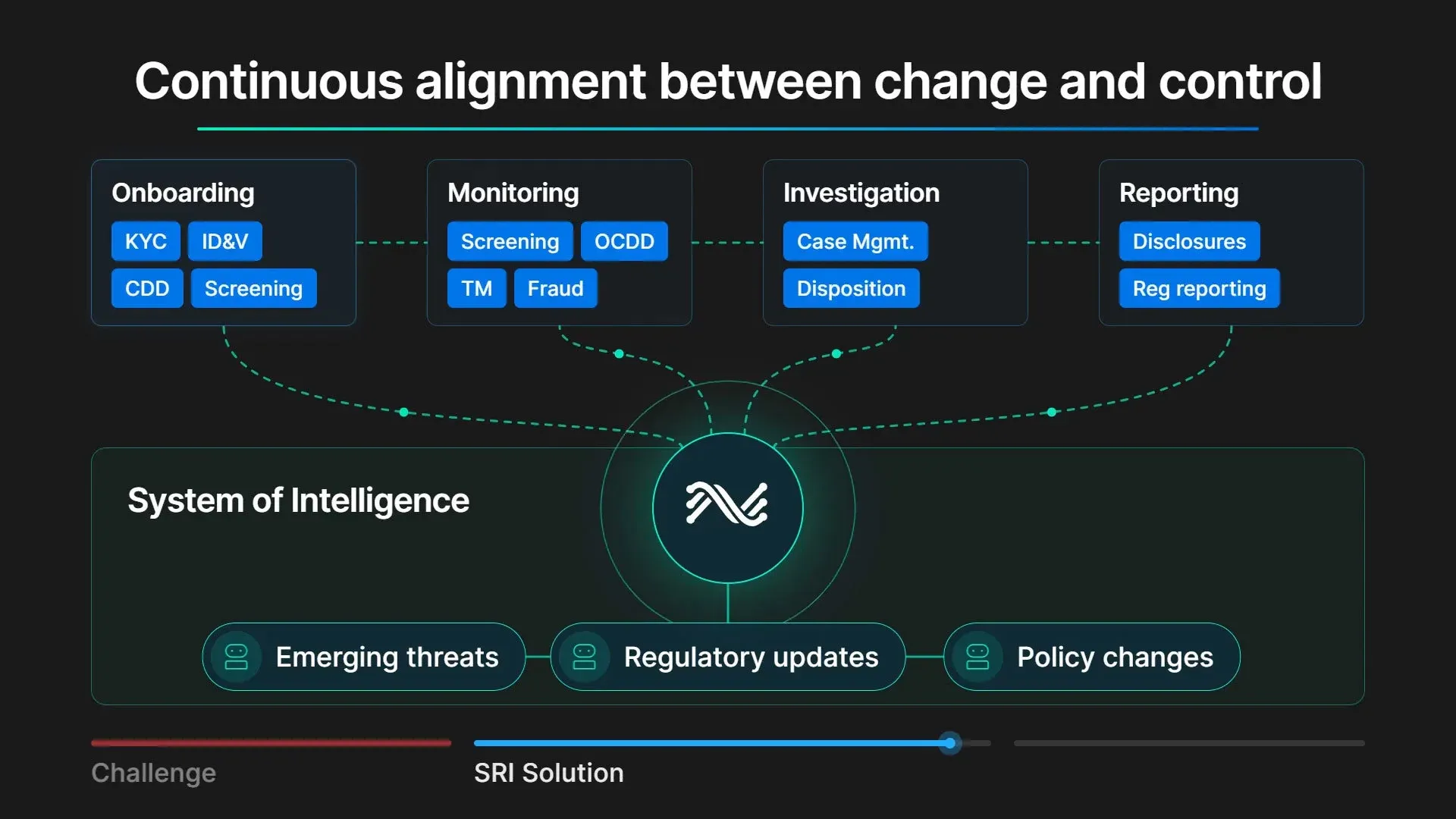
SymphonyAI is attempting to disrupt the traditional, episodic approach to financial crime management by launching Symphony Risk Intelligence (SRI), an agent-native platform designed for continuous risk assessment. The company is positioning this "Always-on Compliance™" model as a necessary evolution for institutions struggling to keep pace with shifting regulatory landscapes and criminal typologies. This move comes as new industry research highlights a massive structural deficiency in how financial entities manage risk. Specifically, a recent report suggests that the vast majority of the sector relies on static, periodic reviews that fail to account for real-time changes in threats or regulations. By deploying agentic orchestration, SymphonyAI aims to bridge the gap between scheduled compliance cycles and the actual speed of modern financial crime.
Addressing the 4.7% Continuous Compliance Benchmark
The strategic motivation behind the Symphony Risk Intelligence launch is rooted in a significant industry failure identified in the FinCrime Frontier 2026–27 Report, co-released by SymphonyAI and AML Intelligence. According to that research, only 4.7% of financial institutions currently update their compliance monitoring and controls continuously as risk profiles change. The remaining majority operates under a model that is increasingly viewed as obsolete. The report further notes that 76.3% of institutions still rely on manual alert reviews or only partial automation, a figure that has shown almost no year-over-year improvement.
SymphonyAI is positioning SRI to move institutions away from these "static, episodic approaches." The platform utilizes a "System of Intelligence" to monitor changes in regulations, threats, and customer risk in real time. Instead of waiting for a scheduled review, the platform uses autonomous agents to handle detection, triage, investigation, and reporting. This agentic approach is designed to be "governed," meaning the company provides configurable human oversight—ranging from semi- to fully autonomous—and maintains a complete audit trail for every decision made by the AI. This is intended to prevent the "catching up" effect where compliance teams only address risks after they have already materialized.
Regulatory Pressure and Operational Efficiency Claims
The rollout of SRI coincides with a period of heightened global regulatory scrutiny, which SymphonyAI identifies as a major inflection point. The company points to several specific regulatory shifts, including FinCEN's AML/CFT reforms in the United States, the EU AML Package and AMLA, and tightening oversight from Singapore's MAS and Australia's AUSTRAC. As business models and payment rails evolve, the company suggests that static rule sets are being outpaced by new financial instruments and criminal tactics.
SymphonyAI claims that its platform does not seek to replace existing systems of record but rather to "augment and hydrate" them with current data. The company asserts that this integration can lead to significant operational improvements for top-tier financial institutions. Specifically, SymphonyAI reports that its capabilities have driven up to 80% fewer false positives, 70% faster case resolution, and a six-fold increase in investigator productivity. By allowing institutions to implement the platform in specific domains—such as end-to-end transaction monitoring—the company claims coverage gaps can be closed in weeks rather than months, potentially absorbing manual workloads without increasing headcount.
Key Takeaways
- Only 4.7% of financial institutions currently update their compliance monitoring and controls continuously as risk changes, according to the FinCrime Frontier 2026–27 Report.
- SymphonyAI's new Symphony Risk Intelligence (SRI) platform utilizes "agentic orchestration" to automate detection, triage, investigation, and reporting.
- The company claims its technology can deliver up to 80% fewer false positives and a six-fold increase in investigator productivity for financial institutions.
FinanceInsyte's Take
In our view, SymphonyAI is making a calculated bet that the "compliance gap" identified in their research is a primary driver for enterprise software spend in the next two years. By highlighting that 76.3% of the industry is still stuck in manual or partially automated workflows, they are not just selling a tool; they are selling a solution to a systemic regulatory vulnerability. The shift toward "agent-native" architecture suggests that the industry is moving past simple automation and into the era of autonomous decision-making. However, the success of this model will depend entirely on the "governance" aspect. For C-suite executives, the transition from periodic to "always-on" compliance requires a fundamental shift in trust—moving from human-led periodic audits to machine-led continuous monitoring. If SymphonyAI can prove that their audit trails are truly bulletproof under regulatory scrutiny, they may set a new standard for financial crime operating models.
Questions & Answers
How does Symphony Risk Intelligence differ from traditional compliance software?
Unlike traditional systems that rely on static rule sets and scheduled periodic reviews, SRI uses an agent-native "System of Intelligence" to continuously monitor changes in regulations, threats, and customer risk. This allows for real-time detection and triage rather than waiting for the next manual review cycle.
What specific operational metrics does SymphonyAI claim the platform can achieve?
SymphonyAI states that its platform has driven up to 80% fewer false positives, achieved 70% faster case resolution, and resulted in a six-fold increase in investigator productivity when used by top-tier financial institutions.
How does the platform address the need for human oversight in automated processes?
The platform includes "governed agentic orchestration," which allows institutions to configure human oversight levels from semi-autonomous to fully autonomous. It also maintains a complete audit trail for every decision made by an agent to ensure regulatory transparency.
What is the current state of continuous compliance monitoring in the financial sector?
According to the FinCrime Frontier 2026–27 Report, only 4.7% of financial institutions continuously update their compliance monitoring and controls in response to changing risks, while 76.3% still rely on manual or partially automated alert reviews.
Source: SymphonyAI