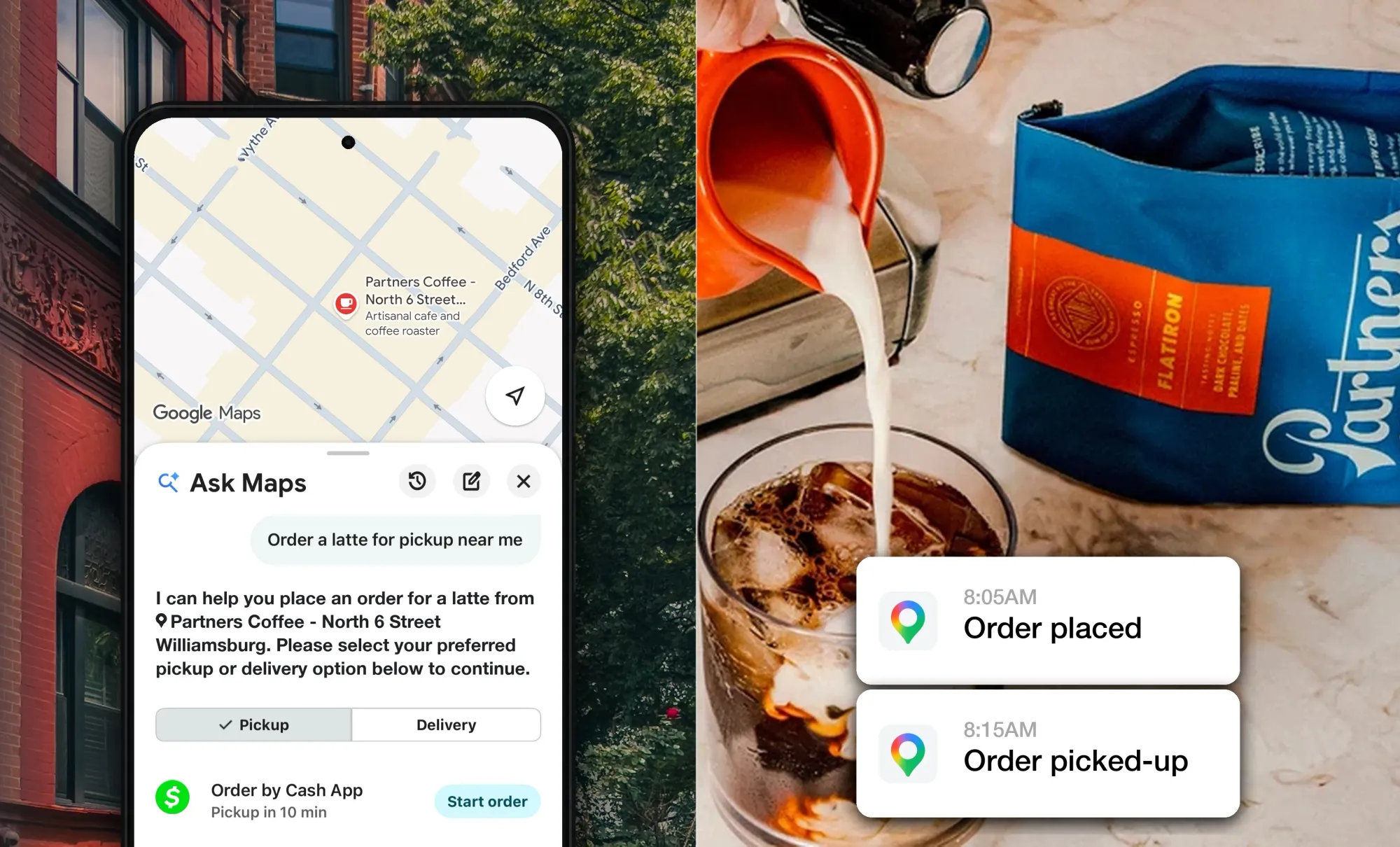
Square has announced an expansion of its partnership with Google, integrating U.S. food and beverage sellers into Ask Maps, a conversational AI experience within Google Maps. This collaboration allows customers to discover restaurants and place orders through natural language queries. By activating a Google Business Profile, Square sellers can surface in AI-driven results with menus, hours, and location details that sync automatically from the Square Dashboard. This integration aims to capture evolving consumer behaviors as users shift from traditional search to AI-powered conversational discovery and seamless transaction flows.
Square Integration with Google Ask Maps
The updated partnership enables Square food and beverage sellers to appear directly within Ask Maps responses. When customers use conversational prompts, such as requesting specific dishes for pickup, Square sellers can be surfaced as relevant options. A critical component of this update is the automated synchronization of data; menus, operating hours, and location details pull directly from the Square Dashboard to the Google Business Profile in real time. This eliminates the need for manual updates or additional API development by the merchant.
Furthermore, the integration facilitates a complete transaction loop. Customers can browse menus, customize orders, and complete checkouts using Order by Cash App directly within the Google Maps interface. For the merchant, these orders flow seamlessly into existing Square infrastructure, including the Point of Sale (POS) and Kitchen Display Systems. This ensures that the transition from AI-driven discovery to operational fulfillment requires no additional manual lift or complex technical configuration for the business owner.
Expanding Agentic Commerce via UCP
This collaboration represents a strategic move toward "agentic commerce" through the expansion of the Universal Commerce Protocol (UCP). Square, Google, and other partners are extending this open standard specifically to the food industry to make ordering journeys more intuitive within AI environments. By utilizing UCP, the companies aim to standardize how AI agents interact with commerce data, ensuring that food ordering becomes a seamless part of the conversational user experience.
The initiative signals a shift in how financial infrastructure must support discovery-led commerce. Rather than focusing solely on the checkout moment, the partnership integrates the entire lifecycle—from the initial AI-driven inquiry to the final kitchen notification. This approach positions Square as a central layer in the Google ecosystem, ensuring that as consumer search habits evolve toward conversational AI, the underlying financial and operational data remains accurate, accessible, and ready for immediate transaction.
Key Takeaways
- Square sellers can surface in Google’s Ask Maps through automated data syncing from the Square Dashboard.
- Customers can complete full food orders and checkouts via Order by Cash App within the Google Maps interface.
- Square and Google are expanding the Universal Commerce Protocol (UCP) to the food industry to support agentic commerce.
FinanceInsyte's Take
In our view, this partnership marks a significant pivot from transactional processing to integrated discovery-to-fulfillment ecosystems. By embedding Square’s operational data directly into Google’s conversational AI, Block is positioning its financial infrastructure as a vital component of the "agentic commerce" era. This move reduces the technical barrier for small merchants to participate in AI-driven search, effectively turning their existing POS data into a marketing and sales engine. For the broader fintech sector, this signals that the future of merchant services lies in deep, standardized integrations with AI ecosystems, where the value is derived from the seamless movement of data between search, intent, and settlement.
Questions & Answers
How does this integration impact the operational workload of Square merchants?
The integration is designed to require no additional operational lift. Because menus, hours, and location details sync automatically from the Square Dashboard to Google Business Profiles, merchants do not need to manually update multiple channels or manage new APIs.
What role does the Universal Commerce Protocol (UCP) play in this announcement?
UCP serves as an open standard for agentic commerce. Square and Google are expanding this protocol to the food industry to ensure that AI-driven ordering journeys are seamless, intuitive, and standardized across different digital ecosystems.
Can customers complete a full transaction within the Google Maps interface?
Yes. Customers can use Ask Maps to browse menus, customize their food orders, and complete the checkout process using Order by Cash App, making the journey from discovery to purchase highly integrated.
How do orders from Ask Maps reach the merchant's physical location?
Orders placed through the AI experience flow directly into the merchant's existing Square setup, including their Point of Sale (POS) and Kitchen Display System, ensuring immediate visibility for staff.
Source: BUSINESSWIRE