
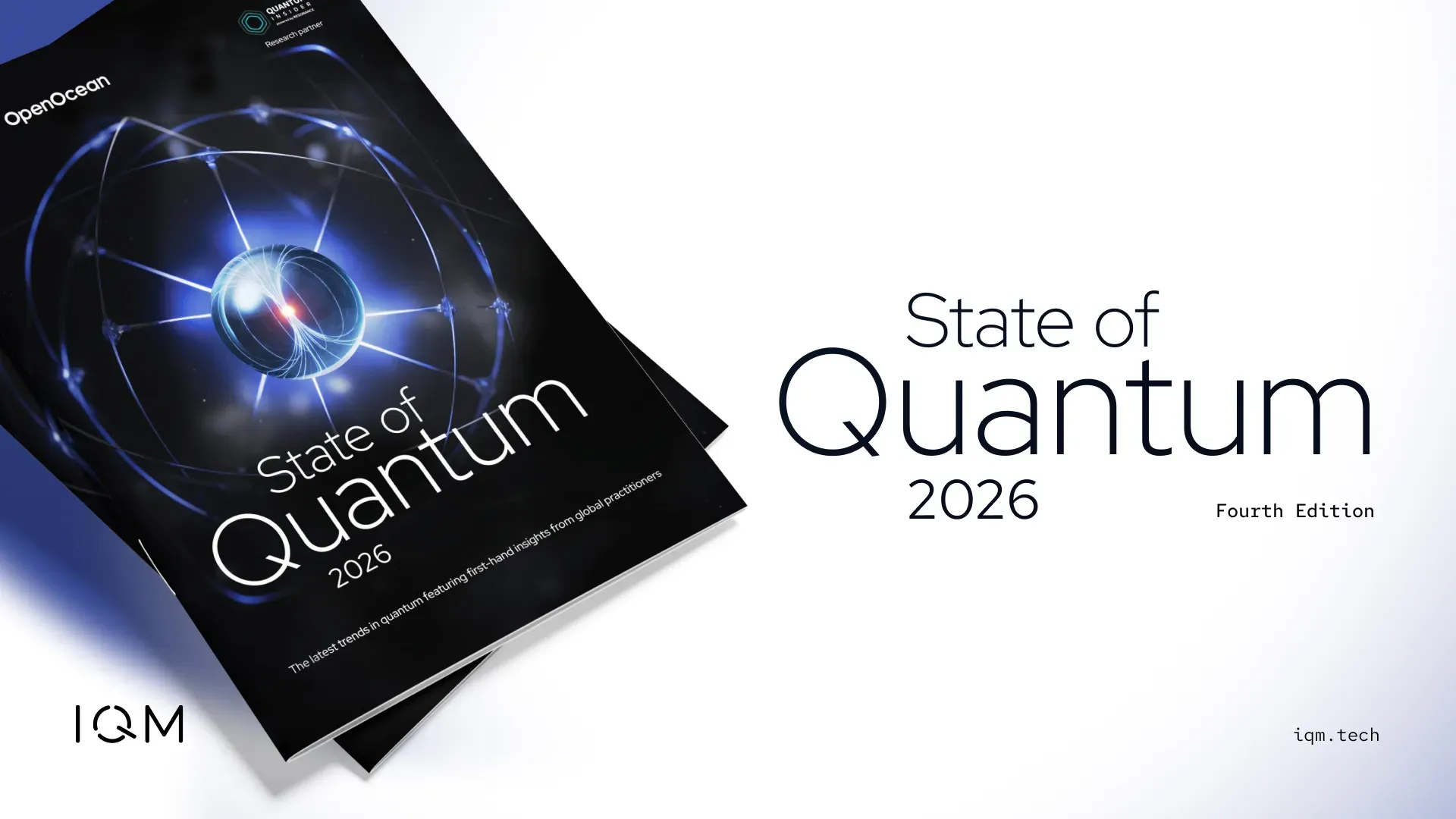
Enterprises are now “hands‑on” with quantum computers, but only a few have moved beyond pilots to scaled deployment, according to the State of Quantum 2026 study released today by IQM Quantum Computers and The Quantum Insider. The report, the fourth annual State of Quantum 2026, combines three layers of evidence: tracked transaction data spanning from 2021 through the first quarter of 2026, a validated survey of 107 senior practitioners across the Americas, EMEA, and APAC, and 19 in‑depth interviews with leaders from organizations such as Airbus, BMW, Moderna, Deutsche Bahn, Argonne National Laboratory and the Oxford Quantum Institute. Together these sources paint a picture of a market that has moved well beyond the early‑stage question of “Can we get access to a quantum machine?” to the more demanding challenge of “Can we build reliable, repeatable capability around that machine?” The findings show that while 89 % of respondents are already experimenting with quantum hardware or cloud services, only a tiny fraction—3 %—have progressed to the point of running production‑grade workloads at scale. This gap, the authors argue, defines the emerging “capability era” and creates a clear first‑mover advantage for organizations that invest now in talent, algorithms, and integration frameworks.
State of Quantum 2026 Shows Broad Hands‑On Activity, Limited Production
The State of Quantum 2026 report confirms that quantum engagement is now almost universal among large enterprises. A striking 89 % of surveyed respondents say they are actively working with quantum technology, whether through internal labs, cloud‑based testbeds, or collaborative projects with vendors. Nevertheless, the depth of that engagement varies dramatically. Only 10 % report any limited production use—meaning they have moved beyond proof‑of‑concept experiments to run a handful of repeatable jobs—while a mere 3 % have achieved true scaled deployment, where quantum workloads are integrated into regular business processes and supported by dedicated operational teams.
To help quantify how ready the market is, the study introduces a Quantum Readiness Index (QRI) that aggregates four dimensions—Workforce, Innovation, Investment, and Adoption—into a single score. The global cohort receives a 58 out of 100, positioning it in the “Developing” tier: organizations have moved past basic awareness and early exploration, but they are not yet prepared for large‑scale, production‑level adoption. The index also reveals internal imbalances: hiring, budgeting, and pilot projects are comparatively mature, whereas proprietary intellectual‑property programs lag far behind, with only 9 % of respondents reporting a resourced IP effort.
The interview cohort reinforces these macro trends. Leaders from Airbus, BMW, Moderna, Deutsche Bahn, Argonne National Laboratory and the Oxford Quantum Institute all cite skills shortages as the most persistent obstacle—66 % or more of large enterprises, universities and government buyers name talent gaps as the primary barrier. Algorithm‑design challenges rank second, while concerns about qubit immaturity appear less frequently, suggesting that the hardware itself is no longer the dominant bottleneck for most buyers.
Market Shifts: From Access to Capability Building
Historically, quantum buyers measured progress by hardware access metrics such as qubit counts or the ability to run a single circuit on a cloud platform. The 2026 data shows a decisive pivot toward capability. Across hybrid and standalone deployment models, roughly 46 % of buyers now expect on‑premises quantum infrastructure to be part of their access strategy within the next three years, while 24 % favor a pure public‑cloud approach. This shift reflects a deeper desire to “see into a machine, calibrate it, integrate it with systems they already run, and retain the capability they develop,” as the report puts it.
Capital is following the same trajectory. Quantum‑related investment surged to $8.3 billion in 2025, almost five times the amount raised the year before. The growth was driven by larger deal sizes rather than an increase in the number of deals, indicating that investors are rewarding demonstrable milestones over speculative roadmaps. Seven quantum firms have completed SPAC mergers since 2021, with a second wave extending through 2025‑2026, underscoring the market’s move toward public‑market financing.
Procurement criteria are evolving in lockstep with these financial trends. Buyers now prioritize openness, calibration access, and co‑development quality. Black‑box offerings—where the vendor retains full control over the hardware and software stack—are increasingly seen as incompatible with organizations that aim to build internal expertise. Sovereignty requirements in Europe and the Gulf further reinforce this pattern, as regulators demand data‑residency and host‑country‑control clauses that make opaque, fully managed services less attractive.
IQM Quantum Computers emerges as the clear market leader in this new environment. Transaction data shows IQM captured 19 % of quantum‑computing contracts worldwide from 2021 through Q1 2026, and the company led all tracked vendors in national high‑performance‑computing (HPC)‑quantum deployments, delivering nine installations across six countries between 2025 and Q1 2026. IQM’s on‑premises deployment model—offering customers direct ownership and control of quantum hardware—aligns closely with the emerging demand for calibrated, co‑developed capability.
Relevance for Financial Institutions
Financial services firms that rely on high‑performance analytics, risk modeling and cryptographic security are among the sectors surveyed. The report’s timing insight—vendor roadmaps converging on fault‑tolerant quantum computing between 2029 and 2031—means the intervening years are critical for developing talent, algorithms and integration experience. Workforce training, which the study estimates takes two to five years, is identified as the primary constraint on progress.
For banks, insurers and fintechs, the shift from merely accessing quantum hardware to embedding calibrated, co‑developed quantum modules into existing data pipelines could affect future pricing models, stress‑testing frameworks and secure‑transaction protocols. Early adopters that invest now in skilled staff and proprietary algorithms may secure a competitive edge when commercial fault‑tolerant machines become available, while later entrants could face a structural disadvantage in talent and know‑how.
The report also highlights concrete use‑case pathways relevant to finance. Participants described pilots in portfolio optimization, Monte‑Carlo risk simulations, and quantum‑enhanced cryptographic key generation. Although most of these pilots remain at the experimental stage, organizations that have moved beyond limited production—such as the 10 % reporting any repeatable quantum jobs—are already beginning to quantify cost‑benefit ratios and to outline migration plans for when fault‑tolerant hardware arrives.
Key Takeaways
- 89 % of surveyed enterprises are hands‑on with quantum, but only 3 % have achieved scaled deployment (State of Quantum 2026).
- The Quantum Readiness Index scores the global cohort 58 / 100, placing it in the “Developing” tier, with skills cited as a barrier by 66 % or more of large buyers.
- Quantum investment surged to $8.3 billion in 2025, and IQM leads the market with 19 % of contracts and nine national HPC‑quantum installations through Q1 2026.
FinanceInsyte's Take
The study underscores that quantum capability, not just access, is becoming the decisive factor for enterprises—including financial institutions—looking to future‑proof their analytics and security stacks. While capital is arriving at scale, the talent and algorithmic pipelines required to exploit quantum advantage will take years to mature, leaving early movers with a measurable head start. Executives should monitor skill‑development programs, co‑development procurement terms and the evolving regulatory landscape around data sovereignty as they plan quantum‑readiness roadmaps.
Source: Businesswire