
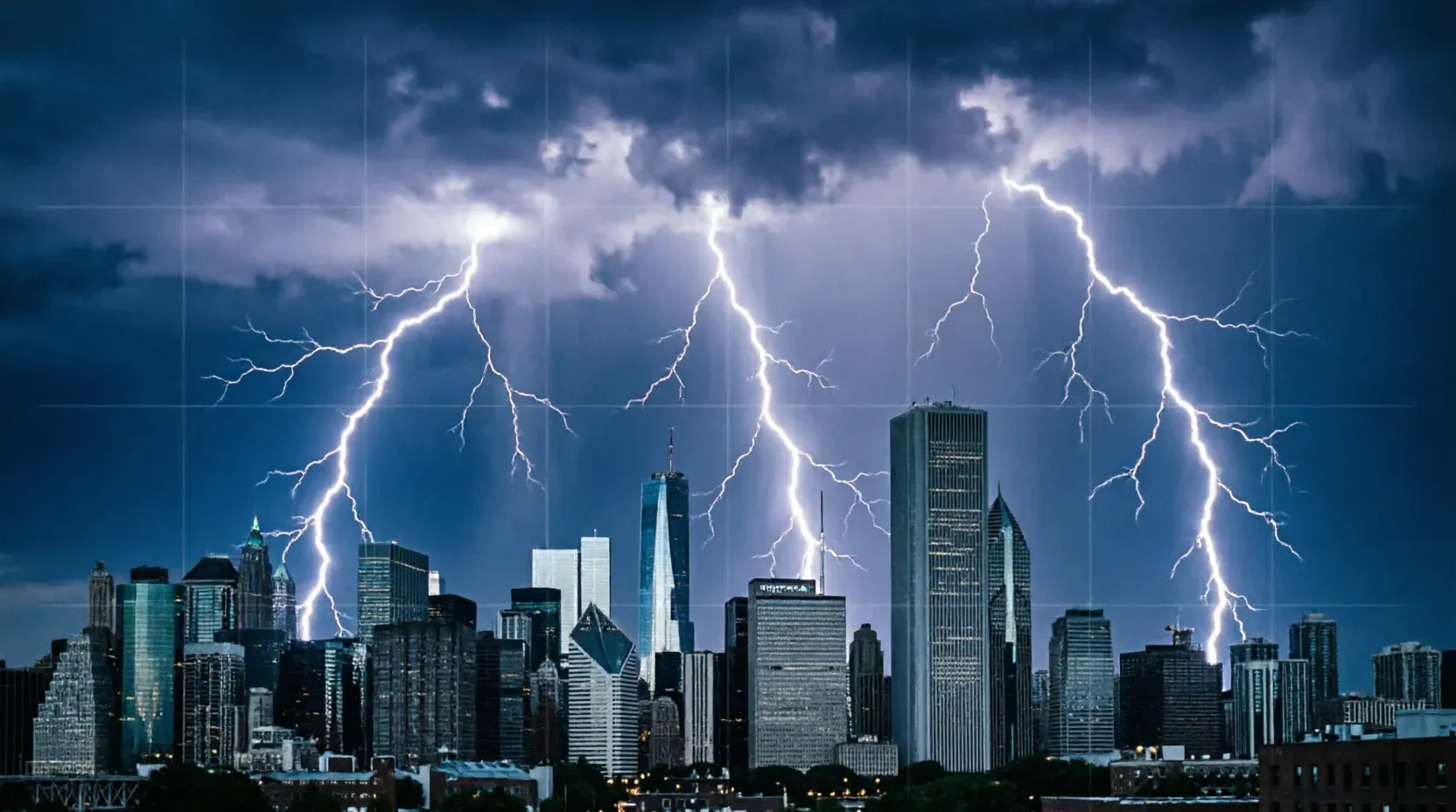
U.S. homeowners insurance faced an unprecedented wave of lightning‑related losses in 2025. According to the Insurance Information Institute (Triple‑I), insurers paid an estimated $1.65 billion in claims tied to lightning strikes—59 % more than the $1.04 billion paid in 2024. The jump was not driven solely by a higher number of incidents; the average cost per claim leapt 42.8 % to $26,616, pushing total payouts to the highest level since 2020. These figures reflect a confluence of factors that risk‑aware CFOs, underwriters, and corporate risk managers cannot ignore: accelerating reconstruction costs, inflation‑driven labor and material price spikes, the expanding market value of home electronics and smart‑home devices, and an uptick in litigation activity surrounding property damage. As lightning‑related exposure grows, insurers are revisiting pricing models, while homeowners are being urged to adopt more robust protection measures.
Triple‑I Reports Record Lightning Claim Payouts for 2025
Triple‑I’s latest analysis shows that the total number of lightning‑caused homeowners claims grew 11.6 % to 61,986 in 2025, up from 55,537 the year before. Although the claim count rose modestly, the average cost per claim surged nearly 43 %, reaching $26,616. The agency attributes this steep cost increase to three interlocking trends:
- Higher rebuilding and repair expenses – Inflation has pushed labor rates and material prices (especially lumber, drywall, and roofing) well above pre‑pandemic levels, inflating reconstruction budgets.
- Greater value of in‑home technology – Modern households contain expensive smart‑home hubs, high‑definition entertainment systems, and networked appliances, all of which are vulnerable to power surges generated by lightning.
- Litigation abuse – An increase in lawsuits over damage assessments and coverage disputes adds legal costs that are reflected in the average claim figure.
Key figures from the report:
- Total payouts: $1.65 billion (2025) vs. $1.04 billion (2024)
- Average claim cost: $26,616 in 2025, up 42.8 % from the prior year
- Cost growth since 2017: 146.9 % increase, from $10,781 to $26,616
Triple‑I CEO Sean Kevelighan emphasized that “the sharp increase in average claim costs reflects broader trends affecting homeowners across the country, including rising reconstruction costs, inflation, the growing value of property and technology inside the home, as well as litigation abuse.” He added that these dynamics underscore the importance of preparedness and resilience for both insurers and policyholders.
Florida, California and Texas Lead Lightning Losses
Geographically, Florida, California and Texas again dominated lightning‑related claim activity. Florida generated the most claims—5,167 in 2025—solidifying its position as the leading state for lightning incidents. Texas, while ranking third in claim frequency, recorded the highest total insured losses at nearly $253 million and posted the steepest average cost per claim at $60,382. California’s figures, though lower in absolute dollar terms than Texas, remain significant because the state’s wildfire‑prone western regions experience lightning‑ignited fires that are often classified under fire or wildfire categories rather than lightning‑specific claims.
State Farm, the nation’s largest homeowner insurer with $39 billion in direct premiums written in 2025, highlighted the broader damage pathways: “Lightning can cause extensive damage beyond a direct strike… power surges can damage electrical systems, appliances, computers and smart‑home technologies.” Dave Phillips of State Farm urged homeowners to adopt surge protection devices, conduct regular electrical system maintenance, and develop preparedness plans that include safe shutdown procedures for critical electronics.
The report also notes that lightning‑induced fires and wildfire ignitions—particularly in the West—may be under‑reported in lightning‑specific claim data, as such losses are often classified under fire or wildfire categories. This classification nuance suggests that the true financial impact of lightning could be larger than the $1.65 billion figure indicates.
Risk Management Perspectives from Industry Experts
The Lightning Protection Institute (LPI) reinforced the business case for proactive mitigation. Executive Director Tim Harger pointed out that lightning strikes can occur at an astonishing 100 times per second, a frequency that makes comprehensive protection essential for any structure. He stated, “Properly installed lightning protection and surge protection systems can significantly reduce risk and help keep people, property, and operations safe.” LPI’s guidance emphasizes three core actions for risk managers:
- Install certified lightning protection systems on new construction and retrofit existing high‑risk properties.
- Deploy whole‑home surge protection devices at the service entrance to guard against transient over‑voltages.
- Implement regular inspection and maintenance schedules to ensure that grounding and bonding components remain effective.
These recommendations align with insurers’ emerging underwriting adjustments, which are beginning to factor in the presence (or absence) of such mitigation measures when setting premiums and policy terms. Corporate risk officers are therefore encouraged to integrate lightning‑specific risk assessments into broader resilience strategies, especially for facilities located in the Sun Belt and Southwest where claim frequency and severity are highest.
Key Takeaways
- U.S. insurers paid $1.65 billion for lightning‑related homeowners claims in 2025, a 59 % increase over 2024.
- The average claim cost rose 42.8 % to $26,616, the highest level since 2020.
- Florida, California and Texas accounted for the majority of claims, with Texas posting the highest average cost per claim at $60,382.
FinanceInsyte's Take
The sharp uptick in lightning‑related losses highlights a growing exposure for property insurers and the organizations they serve, especially in the Sun Belt and Southwest. While the data confirm higher claim costs, the extent of untracked losses—such as fire or wildfire claims stemming from lightning—remains uncertain. Executives should monitor emerging underwriting guidelines and consider integrating lightning‑specific risk assessments into broader resilience strategies.
Source: Businesswire