
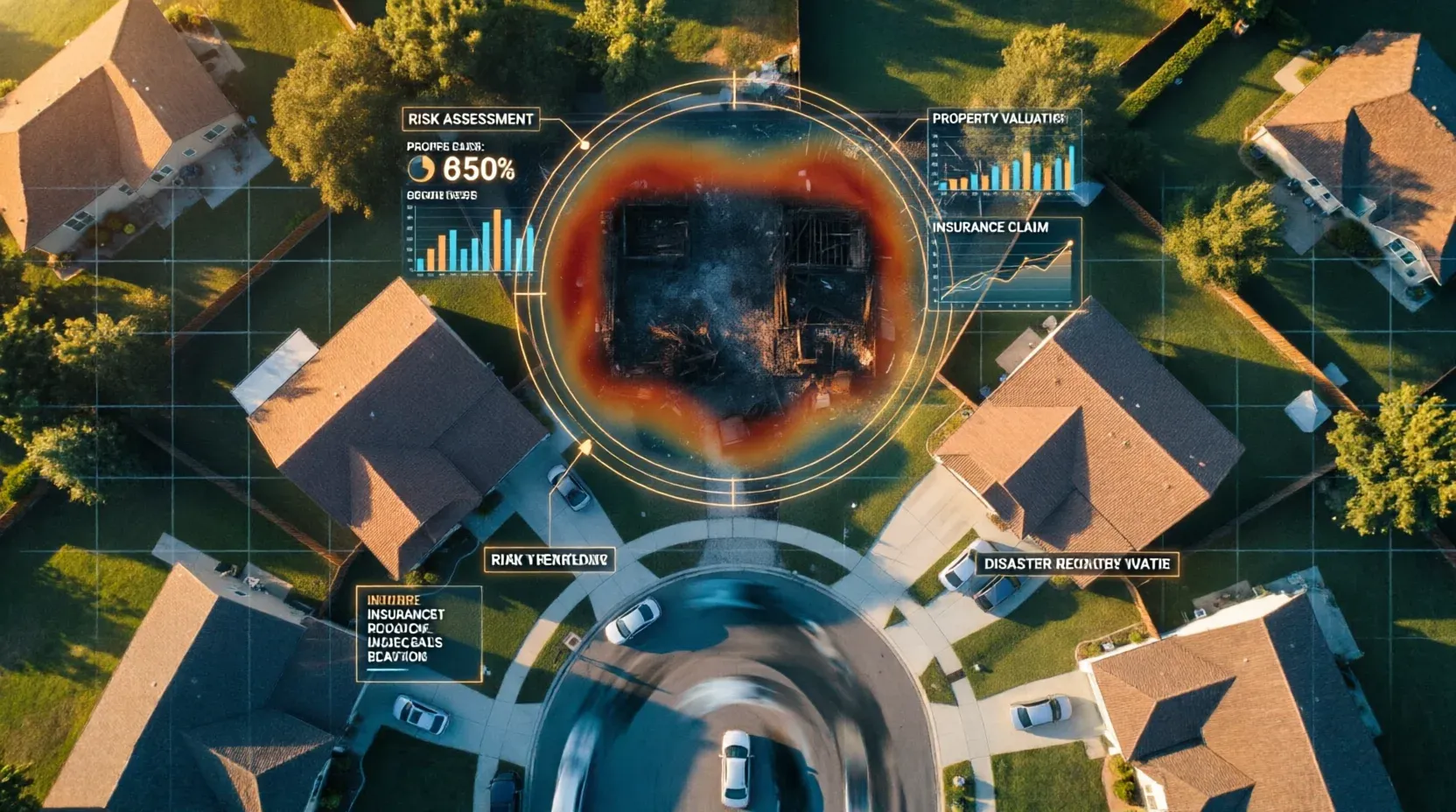
LexisNexis Risk Solutions has released its 2026 U.S. Home Trends Report, revealing a significant shift in the American home insurance landscape characterized by a decoupling of claim frequency and severity. While the total number of claims has trended downward, the cost of individual claims has reached unprecedented levels. This report provides critical data for financial infrastructure providers, insurers, and risk managers navigating a volatile market shaped by extreme climate events and inflationary pressures. The findings highlight how single catastrophic incidents, such as the Los Angeles wildfires, can fundamentally alter annual loss patterns and necessitate more granular, data-driven underwriting strategies to maintain solvency and pricing accuracy in a shifting risk environment.
2025 All Peril Severity and Climate Disasters
The 2025 reporting period was defined by a dramatic surge in claim severity, which reached an all-time high. According to the LexisNexis report, All Peril severity increased by 25.9% from 2024 and stands 93.2% higher than 2019 levels. This spike in severity occurred even as the industry saw a 23.8% decrease in claim frequency and a 4.4% decrease in overall All Peril loss cost. Despite the slight dip in total loss cost, the figure remained the third highest in a seven-year period and was 50.0% higher than in 2019.
Climate-driven catastrophes played a central role in these metrics. The United States experienced 23 climate disasters in 2025 that resulted in $1 billion or more in damages, totaling $115 billion in overall damages. This represents the third highest year of billion-dollar climate events on record. A primary driver of this volatility was the January 2025 Los Angeles wildfires, including the Palisades and Eaton fires. These wildfires accounted for more than half of the total climate disaster damages, costing an estimated $61.2 billion. This event stands as the costliest recorded wildfire in U.S. history, illustrating the massive impact a single catastrophic event can have on national insurance loss trends and the necessity for robust catastrophe modeling.
Shifting Peril Patterns and Inflationary Pressures
Specific perils showed divergent trends throughout 2025, driven by both weather events and economic factors. Fire and Lightning emerged as the most defining perils, with loss cost increasing 76.8% and severity rising 67.3% year over year. Conversely, Wind loss cost decreased by 50.4% and severity fell by 12.0%, largely due to a lower number of catastrophe Wind claims. However, a central tornado outbreak in mid-March remained a significant factor, costing an estimated $11 billion.
Non-weather-related perils also reflected the impact of rising economic costs. While Non-Weather-Related Water loss cost decreased by 6.4%, its severity rose by 2.5%. Between 2019 and 2025, severity for this peril increased by 63.16%, a trend likely linked to inflation and the rising costs of materials and labor required for water damage remediation. Similarly, Liability loss cost saw a 4.0% decrease in cost and a 14.6% decrease in frequency, yet severity increased by 12.8% year over year. The report suggests this increase in liability severity may serve as anecdotal evidence of social inflation, where litigation costs drive claim expenses higher than general economic inflation.
Key Takeaways
- All Peril severity reached an all-time high in 2025, marking a 93.2% increase compared to 2019 levels.
- The January 2025 Los Angeles wildfires cost an estimated $61.2 billion, making them the costliest recorded wildfire in U.S. history.
- Fire and Lightning loss costs increased by 76.8% year over year, driven primarily by major wildfire events.
FinanceInsyte's Take
In our view, the LexisNexis report signals a fundamental transition in the home insurance operating model, moving from a high-frequency/low-severity environment to one defined by low-frequency/extreme-severity events. The fact that All Peril severity has nearly doubled since 2019, even as claim frequency declines, suggests that traditional actuarial models based on historical frequency may no longer suffice. This "perfect storm" of rising replacement costs due to inflation and the increasing scale of climate-driven catastrophes requires a shift toward hyper-granular property intelligence. For financial stakeholders and insurers, the data implies that resilience will depend on the ability to integrate multi-source datasets—such as home fortification levels and specific interior risk characteristics—into underwriting. Relying on broad geographic trends is becoming increasingly risky as single events, like the Los Angeles wildfires, now possess the capacity to disproportionately skew annual loss profiles.
Source: https://www.prnewswire.com/