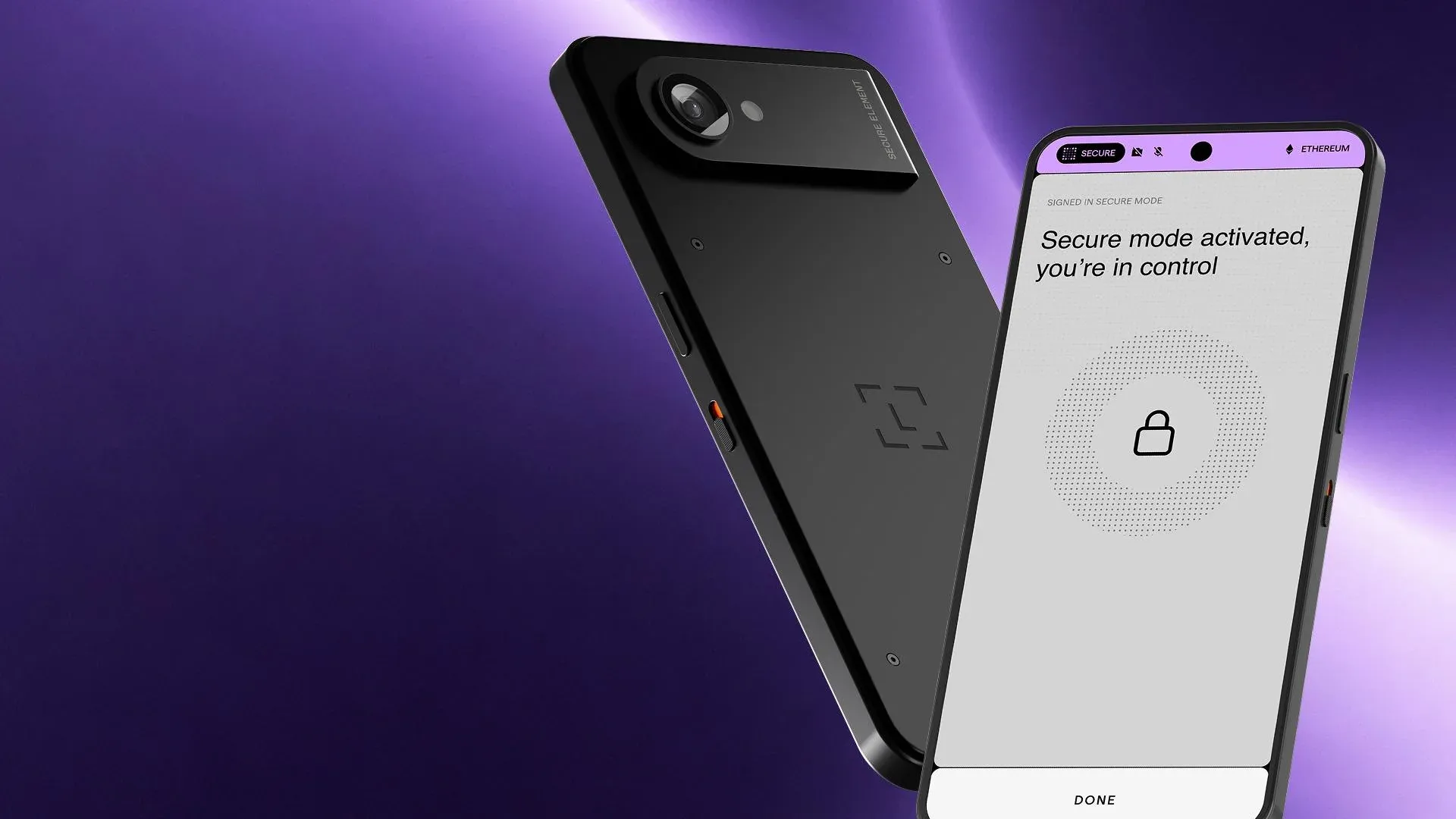
Ledger is attempting to redefine the boundaries of personal digital security by launching a hybrid hardware device designed to mitigate the escalating risks of AI-driven fraud and mobile vulnerabilities. The company announced Ledger Atom, a security and privacy device that integrates Android™ open source with the proprietary Ledger OS™ to allow users to run everyday applications while maintaining a hardware-isolated environment for sensitive transactions. This strategic move comes as mobile zero-day threats nearly doubled in 2025 and cybercrime losses exceeded $11 billion in the same period. By positioning the device as a bridge between consumer utility and institutional-grade security, Ledger is targeting a market increasingly concerned with deepfakes, permission escalation in AI agents, and the inherent insecurity of standard mobile operating systems. The rollout signals a shift from simple asset storage toward a comprehensive hardware-backed identity and communication layer for the digital economy.
Dual-Architecture Security via Ledger Atom
The technical foundation of Ledger Atom rests on a dual operating-system architecture designed to separate high-utility consumer apps from high-stakes financial and identity operations. The device utilizes an FPGA chip to act as a bridge, automatically switching between a "Standard Mode" for everyday applications and a "Secure Mode" for sensitive actions. While the Android™ open-source layer provides the necessary reach for common apps, the Ledger OS™ runs on a secure element chip to provide a hardened environment. This architecture is specifically engineered to prevent applications running in Standard Mode from observing or interfering with operations occurring within Secure Mode. To provide transparency, a "secure bar" at the top of the device informs the user of their current operational state.
Beyond simple transaction signing, Ledger is integrating this hardware into the emerging AI agent economy through "Ledger Agent Intent." This framework applies hardware-enforced controls to AI agents, allowing them to propose actions without holding a user’s private keys. However, the system is designed so that every sensitive action must receive physical approval on the Ledger Atom device. This addresses the risk of data exfiltration and permission escalation attacks inherent in agentic platforms. Furthermore, the device includes a physical hardware privacy switch that cuts power to the cameras and microphone at the circuit level, ensuring that software cannot bypass these privacy controls. This hardware-level mechanism is automatically engaged whenever the device enters Secure Mode.
Strategic Ecosystem Integration and Post-Quantum Readiness
Ledger is positioning Ledger Atom as a central hub within a broader digital ecosystem, rather than a standalone peripheral. The company has announced several key integrations, including a planned partnership with Solana Mobile, where the Seeker app is expected to be preinstalled to provide access to the Solana dApp Store. Additionally, the exchange Kraken is exploring support for the device, which would allow clients to review and "Clear Sign" transactions directly on the device's Trusted Display. This connectivity extends to private communications; the device supports GPG/OpenPGP, enabling users to encrypt messages within the secure environment so that third-party messaging applications never access unencrypted data.
Looking toward long-term technical viability, Ledger is building the device to be "quantum-ready." The hardware is designed to be compatible with NIST post-quantum standards, with the secure hardware itself providing acceleration for post-quantum cryptography. This focus on longevity addresses the potential for future cryptographic breakthroughs to compromise current encryption layers. The device also incorporates advanced anti-tampering measures, including specialized packaging and internal sensors designed to detect if the enclosure or display has been compromised. These features aim to protect the Secure Element, MCU, and FPGA from physical manipulation, providing a defense-in-depth strategy for users managing significant digital value and identity.
Key Takeaways
- Ledger Atom utilizes a dual-OS architecture, combining Android™ open source for utility with Ledger OS™ on a secure element for high-security operations.
- The device features a physical hardware switch that cuts power to the camera and microphone at the circuit level to prevent software-based privacy breaches.
- Ledger Atom is scheduled for availability in Summer 2027, with current "Founder’s Edition" reservations priced at $849.
FinanceInsyte's Take
In our view, Ledger’s move to launch Ledger Atom represents a calculated attempt to capture the "identity and agency" layer of the digital economy, moving far beyond the traditional scope of a crypto hardware wallet. By integrating AI agent management via Ledger Agent Intent and hardware-level privacy for messaging, Ledger is signaling that the next frontier of cybersecurity is not just about protecting assets, but about securing the automated processes and communications that define modern digital life.
The decision to include a dual-OS architecture is a pragmatic response to the "utility vs. security" trade-off that has long plagued hardware signers. By allowing everyday apps to run alongside a hardened OS, Ledger is attempting to reduce the friction that often prevents mass adoption of security hardware. However, the success of this strategy will depend on whether the ecosystem—exchanges like Kraken and mobile platforms like Solana—can provide enough seamless integration to justify the $899 price point. If Ledger can successfully establish the Atom as the standard for "verifiable human approval" in an AI-dominated landscape, they may secure a dominant position in the burgeoning field of hardware-backed digital identity.
Questions & Answers
How does Ledger Atom manage the security risks associated with autonomous AI agents?
Ledger is implementing "Ledger Agent Intent," a framework that allows AI agents to propose actions without possessing the user's private keys. To prevent unauthorized or escalated permissions, the system requires every sensitive action to be physically approved by the user on the Ledger Atom device or a compatible signer.
What technical measures are in place to ensure user privacy during communications?
The device supports GPG/OpenPGP, allowing users to encrypt messages within the secure Ledger OS environment. This ensures that the underlying messaging application only handles encrypted data and never sees the unencrypted content. Additionally, a physical hardware switch provides a circuit-level power cut to the microphone and cameras.
How is the device prepared for future advancements in computational decryption, such as quantum computing?
Ledger Atom is designed to be "quantum-ready" by incorporating compatibility with NIST post-quantum standards. The device includes hardware-accelerated post-quantum cryptography within its secure hardware to protect the encryption layer against future threats.
What is the expected cost and availability for institutional or early adopters?
Ledger Atom is expected to be available in Summer 2027. A limited "Founder’s Edition" is currently available for reservation at $849, while the standard launch price is expected to be $899.
Source: LEDGER